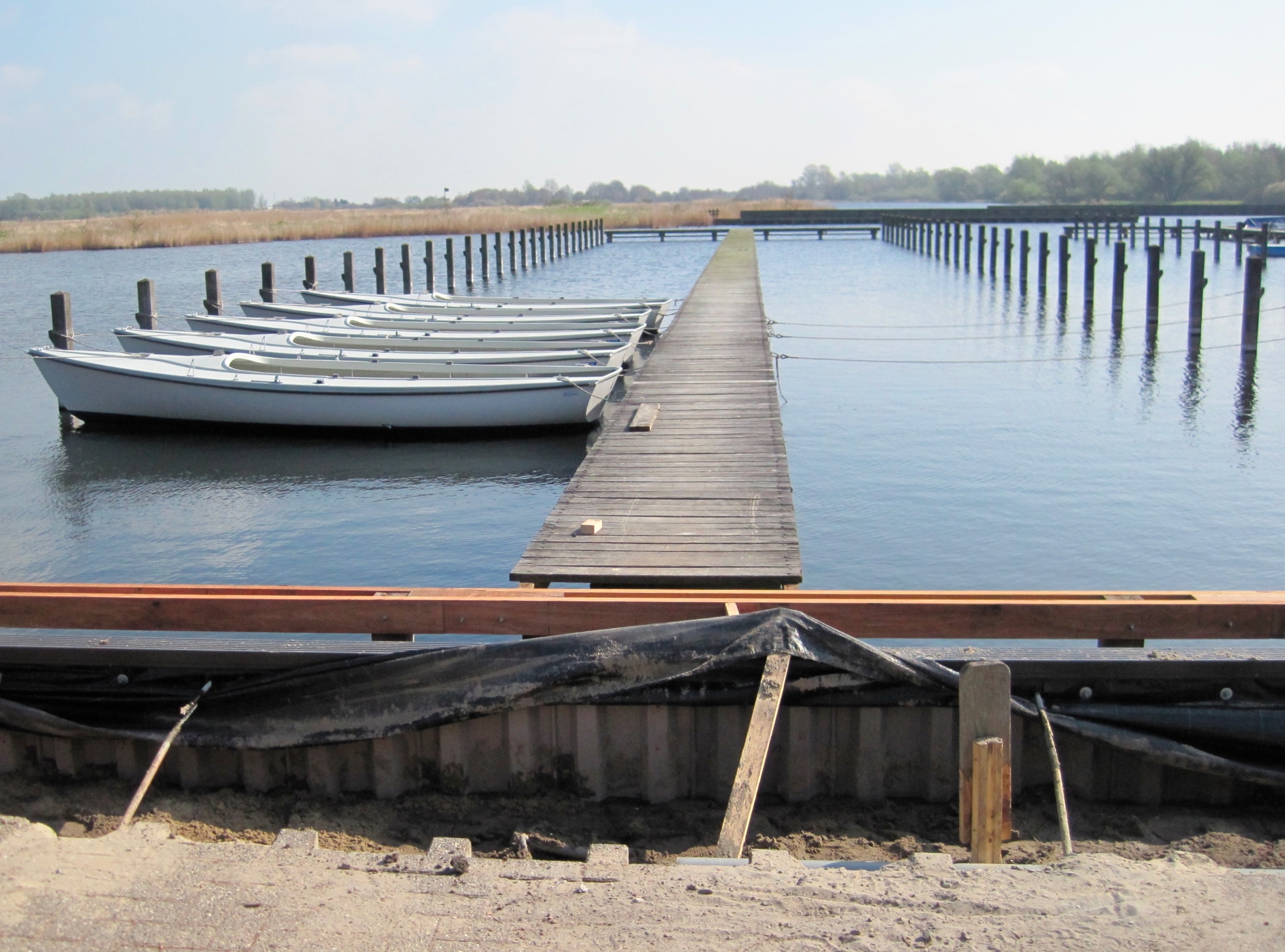
Allochthonia: Languages

Lennier: And in my eleventy-fifth year in the temple, I began to study the 97 dialects and subtongues of our homeworld. And I discovered something truly amazing.
Londo: Yes?
Lennier: Yes. The same word, n!kai, appears in every Minbari dialect and subtongue, yet it never means the same thing twice. For instance, it can mean sand, father, boot—
Londo: Really. That’s astonishing. Truly.
—Babylon 5, “The Quality of Mercy”

Londo is right. Lennier has said something truly astonishing. He said there were only 97 dialects and subtongues on the entire planet of Minbar. That statement is so fractally implausible that it’s worth taking the time to dissect it.
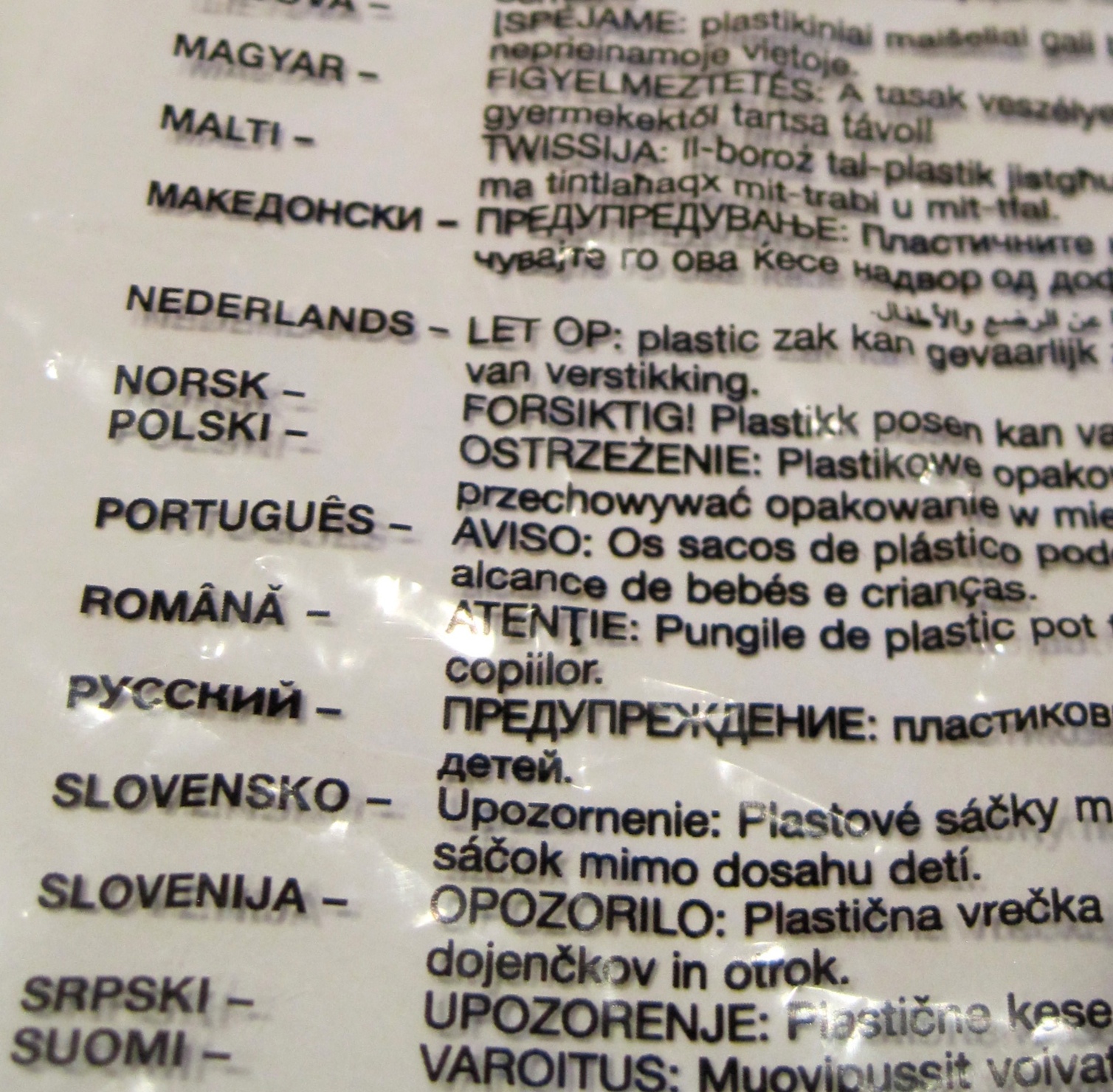
McDonald's toy bag

First of all, note that there are only “dialects and subtongues”. Apparently there’s exactly one distinct language on Minbar, however fragmented. Did verbal communication only arise in one place on the planet, or was there some cultural or physical genocide that eliminated all other tongues and destroyed all record of their nature?

Then there’s the number: 97 is very precise. Are there, then, distinct borders around each of the dialects and subtongues? I’m in a mixed-dialect marriage, and Martin and I can’t agree whether our household language is British or American English. Do the speakers of the different Minbari dialects never immigrate or intermarry? Did language formation stop, and all scholars come to agreement about the borerlines among them?

These are ridiculous questions, and answering them would require a phenomenal amount of retconning and re-engineering of other aspects of their societies. The simple fact is that the Minbari, like pretty much all nonhumans in SF&F, aren’t realistically varied, either culturally or linguistically. I think there are two causes of this:

  1. Writers map foreign cultures onto alien planets.

    So many alien civilizations are just individual Earth cultures with the serial numbers filed off. But that’s blowing up a smaller thing to fit a larger canvas. Terran civilization is not made up of a single culture. Absent a good explanation, it’s hard to believe that an alien civilization would be, either. So the result just looks low-resolution.

    Also, mapping a foreign culture onto an alien species practically guarantees oversimplification. Just as no human being looks as complex on the outside as they feel on the inside, so no culture seems as nuanced to a foreigner as it does to a native.

    (Mapping one’s own culture onto an alien species would be interesting, but much harder.)

  2. The vast majority of SF&F authors come from linguistic monocultures.

    Most of the “old masters” who created our genre were—in addition to being white and male—monoglots1. And most of the “core” writers who define it now come from two of the most linguistically impoverished populations in the Western world. It’s not just that English-speaking Americans and urban Brits are bywords for monolingualism (though we are). We also happen to live in linguistically shallow places.

    British cities are blenders for speech. Extra-regional accents vanish as soon as non-local kids go to school. Single dialect words and idiosyncratic pronunciations last longer, but they’re often detached from their original context and become mere family traditions2. Meanwhile, the incomers generally pick up fewer local words than they lose3, so there’s a dilution of native dialect in the general population.

    And in America, our history of mobility has disconnected us even more from the origins of our language. That’s not because the people who brought English to the continent moved from the place where the language evolved. It’s because they mixed and shuffled about as they did so, losing regional context and coherence. Then, just as we were in the process of creating new regional identities and accents (stealing words from the other immigrant languages in the process), another wave of mobility and the introduction of mass media started to re-homogenize us.

    It’s probably a minor additional factor that much of SF was pioneered by hard science geeks, who were as uninterested in language as they were in, for instance, sociology. There are plenty of writers now who understand linguistic complexity despite the surrounding monoculture. But they weren’t writing Golden Age science fiction; the genre is only starting to catch up with their particular geekery.

Language textbooks

The elephant in the room here is, of course, JRR Tolkien, who invented philologically plausible languages and writing systems for several of the major races in his world. I’m sure there are criticisms to be leveled (Are his species as linguistically and culturally diverse as they should be? Why don’t the hobbits have their own language, separate from the tongue of Men?) But if other writers managed even the appearance of the complexity he created, our genre would be richer for it.

So how does someone who is not a tenured professor of philology at Oxford University go about creating linguistically plausible aliens? Let’s sketch out a realistic, generic cultural and linguistic backdrop for a species. Of course, a lot of it is stolen from human history, but I think the factors that influenced us are pretty universal to planetary populations.

– o0o –

A species that’s scattered all over a planet is likely to “invent” civilization several times in different, isolated places. Each of these civilizations, which will include language as well as culture, will have its own distinctive identity. As a result, there will probably be multiple, mutually unintelligible language families. There may, at this stage of the species’ cultural evolution, be strong behavioral, religious, and ethnic traits associated with those families. That might not last.

Note that these are language families, not individual languages. Unless a population of speakers is close enough to talk to each other practically every day, pronunciation and local vocabulary will start to drift. Give it long enough, and the drift will get in the way of mutual intelligibility. Then the different populations are on their way to speaking different languages within the same family. A good example of this is the evolution of the Romance languages from late Latin.

Counterbalancing this slow spread of linguistic variety will be a number of consolidating factors. As small tribal groups unite into larger entities, one dialect may become the main language across them all. This is the story of most modern European languages: modern Italian comes from Tuscan, modern English is a descendant of Wessex dialect, modern Dutch is basically Hollands, and the ancestor of modern German was originally just spoken in Saxony. The previous dialects may still survive as subsidiary languages.
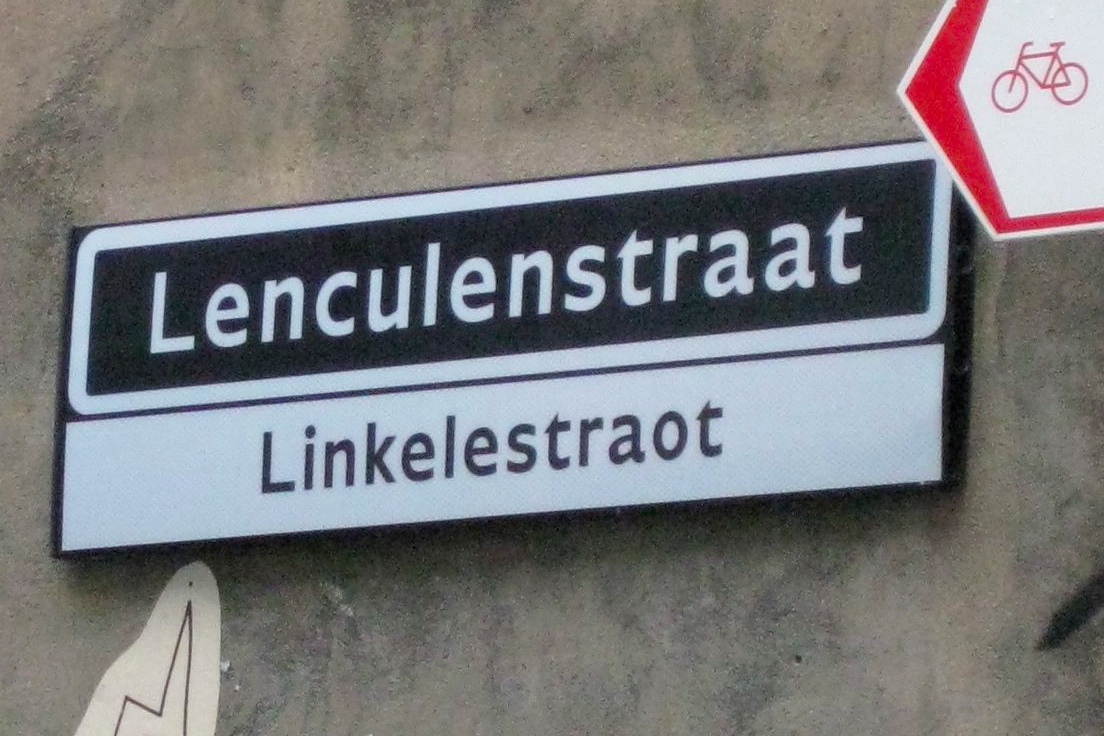
Dutch & dialect street sign, Maastricht (photo credit: Patrick Nielsen Hayden)

When two less-related languages meet, things get even more interesting. They may merge into a creole, or coexist side by side (think Belgium, or Switzerland). One may become the dominant language and the other the “kitchen” tongue. Or—and this is rare and difficult—one language may supplant another completely. I’d still expect, in that event, a large population of loan-words from the loser to infect the winner.

Languages will die, the way that Latin, Classical Greek and Cornish have. Languages may be revived, as Hebrew was. Conquered languages will be a source of national pride and nationalist fervor.

This braided pattern of branching, overlapping, conquering, uniting and resplitting languages is all backdrop. How does it affect specific characters? What plots does it create, and what does it make impossible? A few thoughts:

  • If you grab two random representatives of the species, they won’t necessarily be able to talk to one another. I’ve got fair reading knowledge of four languages (English, Spanish, Latin and Dutch4). Given that, enough patience, and good Charades skills, I could probably have a practical conversation with any European5. But we will not be immediately mutually intelligible. And a person with no Indo-European languages, like someone who spoke only Xhosa, or Mandarin? Forget it.
  • If you show me writing produced somewhere on Earth, the chances that I can read it are pretty small, too.
  • People will travel, for business, tourism, or as refugees. So unless the setting is really isolated, there will probably be speakers of more than one language about. They may be unintelligible to others of their own species as well as to any humans around.
  • Languages and accents will be markers for cultural and class-based rivalries. Some of the differences will be indistinguishable to humans, but they’ll be hugely important to locals.
  • Many people will be multilingual. Many others will be able to say a few things in multiple languages, even if they aren’t fluent. Expect them to try them all on baffled humans.
  • Little children will ask humans to “say something in human”, then giggle at the result. They may be particularly curious about transgressive speech.
  • Speaking an alien language badly will cause locals to assume humans aren’t very bright.
  • In addition to recognized dialects and languages, there will be jargons, argots, weird overlaps, and even wholly invented languages. This will be confusing.

Any more? And which works would you say do a spectacularly good or notably bad job of working with languages?

Goed Slecht
  • The Uplift books by David Brin, albatross @33
  • The Barryar books by Lois McMaster Bujold, Slybrarian @24
  • The Foreigner series by CJ Cherryh, Sylvia Sotomayor @12
  • The Chanur books, by CJ Cherryh, lee @32
  • “Story of your Life” by Ted Chiang, Nix @8
  • Hellspark by Janet Kagan, TexAnne @1
  • Outies by Jerry Pournelle, thomas @41
  • The Sparrow by Mary Doria Russell, Richard Edgar @7
  • Fiasco and Solaris (intra alia) by Stanislaw Lem, Q. Pheevr @9
  • A Caticle of Leibowitz by Walter M. Miller, Jr, Nightsky @15
  • pretty much everything by Vernor Vinge, albatross @33
  • Avatar: The Last Airbender (TV show) Becca Stareyes @2: Common and timeless universal language
  • Enterprise, TexAnne @6: instant comprehension of alien languages.
  • “Born to the Purple” (Babylon 5 episode), Joshua Herring @10: Russian-speaking characters speaking English to one another; her father’s Russian endearment translated into English by Ivanova.
  • Stargate TV series, Lenora Rose @11; film, TexAnne @14: Instant comprehension of alien languages and ancient Egyptian!

  1. The exception is Asimov, who was fluent in both English and Yiddish.
  2. My father, three generations removed from Ireland, grew up with a distinctive pronunciation of the word “almond”. I never heard it elsewhere until I worked with a woman from Dublin.
  3. I added no more than a score of regional dialect words to my vocabulary over fifteen years in Edinburgh.
  4. My Classical Greek is gone.
  5. The main challenges would be a Greek, a Finn or someone from Basque country. If they’re monoglots, we’re toast.

– o0o –

Photo credits:

  • Toy bag & language textbooks: Abi Sutherland
  • Maastricht street signs in Dutch and Limburgs dialect: Patrick Nielsen Hayden

Posted in Allochthonia | 51 Comments

Babylon 5: The Quality of Mercy


Mal: But it ain’t all buttons and charts, little albatross. You know what the first rule of flying is? Well, I suppose you do, since you already know what I’m about to say.
River: I do. But I like to hear you say it.
Mal: Love. You can know all the math in the ‘Verse, but take a boat in the air you don’t love and she’ll shake you off just as sure as the turning of worlds. Love keeps her in the air when she oughta fall down. Tells you she’s hurtin’ ‘fore she keens. Makes her home.
—Serenity

Love isn’t how you feel. It’s what you do.
—A Swiftly Tilting Planet, by Madeline L’Engle

Love is a difficult word, whether it’s applied to ships or to people. Taken at face value, it’s too big, too intimate, and too demanding. So we narrow it down, corral it into specific contexts so that we can tame it and make it safe. If love is only about romance, or if it’s just that gooey thing some Christians say before they hate the sin, then it won’t cost us too much.

But though we hide from it, love is part of how people interact. The work of love, the contribution of one’s time and energy for the good of others, goes on all the time. Sadly, so does its opposite, the soaking-up and stealing of that energy by people with no intention of recompense. This episode is a good example. It’s about people who define themselves by what they give, those who are characterized by what they take, and what happens when the two collide. And it’s about the subtle, ephemeral alliance of the generous that makes Babylon 5, or any community, work. Makes it home.

Structurally, it’s a classic A/B plot episode. There’s a main, serious thread and a minor, humorous one. In this case, they don’t cross over or mirror one another structurally. But they’re both about giving and taking, generosity and selfishness, and the unexpected things that happen when you cross those streams.

The major storyline is a studied contrast between a healer and a killer. The healer in question is former doctor Laura Rosen, who is running an unlicensed clinic in Downbelow with the assistance of her daughter Janice. The clinic comes to Dr. Franklin’s attention because it’s drawing patients from his equally off-the-books operation. Rosen is using an unknown alien device1 to cure a variety of ills. Franklin suspects that she’s a fraud, in business for whatever she can get from her patients. His first guess is money, but she doesn’t have specific prices for her treatments. Because she lets people pay “whatever they can afford” into a donation box by the door, she doesn’t even use social pressure to increase her income.

Having eliminated a financial motive, he investigates further. He still suspects that, under the guise of giving them health, Rosen is taking something from her patients. Janice’s story about how her mother lost her medical license after becoming addicted to stims seems like a good lead. He doesn’t think Rosen is still taking the drugs, but he knows they were merely a tool to further her real addiction: the feeling of making people better. It’s a hunger that he shares2, so he knows the signs.

Although he understands Rosen’s desire to heal people, he’s still concerned that her patients won’t seek proper care while she’s treating them with the alien device. And no amount of sympathy for her position will excuse that for him. Getting her fix of feeling like a healer at the expense of others’ wellbeing is still a form of exploitation. It’s only when he reviews her patients’ files and sees that they are really being cured that he begins to treat her not as a threat, but as a colleague. Then he scans her as she uses the machine, and confirms that she’s giving her own “life energy”3 to cure her patients4.

The episode spends less time establishing that her counterweight in the plot is as much a taker as she is a giver. Karl Edward Mueller is convicted of three murders, but Garibaldi suspects that he’s guilty of more than that. And Talia confirms it, finding that he treasures the memories of many more victims in his mind. In a context where the only thing of real value we have to give one another is ourselves, a multiple murderer is the ultimate thief.

The penalty for murder is the “death of personality”, where the killer is mindwiped and given a new persona that will happily spend his life “serving the community [he] damaged with [his] crimes.” It’s a creepy way of turning a taker into a giver, but the episode presents it as an improvement on execution.5 Mueller, faced with this sentence, escapes custody. But he’s shot as he does, and winds up Downbelow looking for treatment. Naturally, he finds his way to Rosen’s clinic and takes Janice hostage.

So what happens when the ultimate taker meets the selfless giver? She treats him, until she realizes that Mueller will kill her, her daughter, and Dr. Franklin as soon as he’s cured. Then she reverses the polarity of the alien machine to take all of Mueller’s life force into herself. It kills him, and cures the chronic illness she was dying of. But it destroys her, too:

I’ve taken a life, in direct violation of my oath as a doctor. I’m free of pain. I’m free from Lake’s Syndrome. They say I may live another 20 or 30 years. But I do so at the expense of a man’s life. No, Doctor, I’m not all right. I may never be all right again.

The minor plot is another transformative collision between a giver and a taker. Despite his generosity in a few earlier episodes, Londo really does see most interactions in terms of what he can get out of them. He fastens onto Lennier, both because his homeworld has ordered him to “forge good relations” with possible allies, and because he thinks he can cadge drinks off of him for a few days. Londo is an experienced mooch, and continually uses the language of a giver to mask how much he’s imposing on his companion.

Lennier: I am not sure this is a good idea.
Londo: Nonsense! I’m perfectly happy to inconvenience myself for your benefit.
Lennier: But Ambassador, this place…
Londo: Amazing, yes? Here, my friend, you will see the heart and soul of Babylon 5. Also its spleen, its kidneys…a veritable parade of internal organs.6

Lennier is, of course, the perfect patsy, transparent as window glass and trusting everyone to be the same. Londo takes advantage first of his credit chit, then of his mastery of probability in “the ultimate means of interstellar understanding”: poker. And when Londo’s cheating gets them both into a fight, Lenneir turns out to be an impressive martial artist as well.

But this encounter is, in its lightweight way, a turning point as well. Simple, honest Lennier takes the blame for the bar fight, lying to shield Londo.

I was unfamiliar with the rules of conduct in these places, and through error, created offense. Through offense, I created the incident.

This generosity, which is not the gormless vulnerability of a naïf, but rather the chosen action of a controlled man, breaks through Londo’s cynicism.

Londo: Why?
Lennier: In Minbari culture, we are taught that it is an honor to help another to save face.
Londo: But Delenn…
Lennier: Will know better, but will not enquire out of respect. Good day, Ambassador.
Londo: Lennier. Thank you. If you ever need anything from me…

(Although Lennier seems to claim an explanation for Londo’s tentacles as his reward7, it’s clear that both of them regard it as a greater, more durable obligation, as much the product of camaraderie as a debt.)

In addition to the two storylines, this episode also has a couple of smaller interactions that are worth highlighting. They give us a glimpse of the community of givers whose generosity with each other, more than rules or duty, makes the station run.

In the opening scene, Ivanova tracks Dr. Franklin to his clinic and takes him to task, not for starting it, but for doing so without telling her about it.

Look, I don’t mind if you bend the rules a little, Doctor. You know I bend a few myself. But I do like to be informed. If I’m going to share in the blame, I’d at least like to share in the fun.

Franklin immediately gets her washing her hands and rolling up her sleeves to help with the clinic work. She protests, but with a smile, and yields with what looks like real pleasure.

And during the discussion of Mueller’s sentence, Talia indicates that the telepath’s role in the death of personality is painful and taxing.

There’s a lot of demand [for telepaths trained for criminal cases], but not much motivation. It’s stressful. We burn out fast.

Both the Ombuds and Sinclair respect that. The Ombuds’ demeanor as he asks if he can “count on” Talia is that of a man asking a difficult favor of a respected colleague, not one giving an order. And his trust and esteem are clearly part of what makes her accept the job.

This episode isn’t one of the dramatic ones. Characters don’t willingly risk their lives for one another, or make great sacrifices and world-changing choices. (That will come.) But the very ordinariness of the situation places a greater value on the mutual respect and generosity that holds the community that runs the station together. Because it’s the quiet times, the undramatic moments when people act without momentum or endorphins, that truly test their ability to give of themselves reliably and consistently. That’s when the Babylon 5 crew—and all of us—do love.

– o0o –

The episode also includes a couple of funny lines I have to quote, even if they aren’t about the work of love:

Lennier: My people do not react well at all to alcohol. Even a small quantity causes psychotic impulses and violent, homicidal rages.

Sinclair: I’m still waiting for an explanation.
Londo: I am prepared to give you one, Commander, as soon as the room stops spinning.
Sinclair: This station creates gravity by rotation. It never stops spinning.
Londo: You begin to see my problem, hm?


  1. Like so many alien devices in science fiction, it turns out to be a variety of Metaphor Concretizer.
  2. Later in the series, he gets to share the stim addiction too.
  3. Whatever that is. We find out later that it’s made up of tendrils of white light.
  4. See? Metaphor Concretizer.
  5. The episode was partly intended to provoke discussion about the death penalty. I’m happy to host such a discussion, even though I was more interested in writing about something else.
  6. OK, I should have cut that quote down to just what proved my point. But I love that line.
  7. “I am going to take a vow of silence about this whole conversation.”

The next writeup will cover Chrysalis, the last episode in Season One.

Index of Babylon 5 posts

Posted in Babylon 5 | 8 Comments

CSS not working

Technical thing: for some reason, all of my CSS changes, which include a lot of formatting improvements and comment numbering, have stopped working in both Firefox (3.x and 4) and Safari. They still work fine in Chrome. I haven’t checked IE. Updated: Cleared the cache in Chrome, and it’s gone there too. I haven’t changed my CSS, and I haven’t updated my browser, so I suspect it’s something on the WP side.

I’ve looked on the WordPress forums a little and put a support note in. I’m not, at this point, wildly impressed with WP for pulling this particular rug out from under me. This evaluation could be affected by the second “bad enough to be home from work” illness in two weeks. Makes me crabby.

I’ll post an update if I get one, but for the moment, please forgive the missing formatting and, in particular, the missing comment numbers.


Updated: Re-saving the CSS in the back end, then clearing my browser caches, appears to have solved the problem. I am still not wildly amused by WP doing whatever it was that caused the CSS to go away.)

Posted in Blog | 8 Comments

De Nieuwe Batavia: Watchfulness & Distraction

I’m walking the perimeter, checking for an air leak. I know it’s here, I just don’t know where it is. We use a very old-fashioned way to locate leaks. Whenever we get a flag that the air mixture is off somewhere in Jerusalem Ridge, I come out here and prowl around with a candle, using the flicker of the flame to find the leak.
—China Mountain Zhang, Maureen F. McHugh

I was originally going to title this article just “Watchfulness”. I wanted to talk about how Dutch culture includes constant attention to the defenses that keep our feet dry. It’s something I’ve noticed since I moved here in 2007. It’s understated but omnipresent, like the watchful care that I would expect from the population of a space station or a generation ship, forever checking the bulkheads and locks that keep the vacuum at bay.

Leaking lock gate in Edam

The explanation for this watchfulness, I thought, was the Watersnoodramp, the great flood of 1953. That’s when the dikes in the south burst and flooded parts of three provinces, killing over 1,800 people and turning thousands more into refugees. It still looms large in the public memory: children learn about it in school, and footage of it has an intense emotional impact.

But then I started looking into the history of the flood. Why did it happen? The common explanation is one that undercuts my whole thesis: they dikes failed because they weren’t maintained. They weren’t a priority. And that turns out to be the case.

In 1934, the service studied the consequences of impoldering the ‘Biesbosch’. Research showed that the consequences for Dordrecht would be disastrous – almost all the dikes appeared to be too low. A report from 1928 had already stated that the dikes in West-Brabant did not meet the safety requirements, but nobody felt like spending a vast amount of money on raising the dikes. Both surveys showed that something definitely had to be done about the condition of the dikes along the rivers.

Despite the article’s tone, the Dutch were not being lazy or feckless. The last serious sea-flood in the south happened in 1820. Since then, water disasters had been inland, like the hurricane-driven floods of the Harlemmermeer in 1836. Or they’d been in the north of the country, like the one in the Zuiderzee in 1916. And the Dutch addressed both of those problems with enormous and expensive efforts. It was a 15-year effort to drain the Haarlemmermeer; it’s now the site of Amsterdam’s Schiphol Airport. And the mouth of the Zuiderzee was closed off by the Afsluitdijk, turning a sea-mouth into a vast freshwater lake. Some of that lake, the IJsselmeer, was then drained to create the new province of Flevoland.

And the Dutch had other priorities in 1953, ones not directly related to flood protection. Seven years before, the country endured the Hunger Winter, which killed an estimated 18,000 people. War damage had slowed the effort to create new farmland in Flevoland, and lost some recent additions to Noord-Holland back to the IJsselmeer. Meanwhile, the groundwater in the southwest had become increasingly brackish, damaging crops. With the memory of the famine still fresh, preserving the country’s agriculture was a higher priority than fixing the sea-dikes.

Then, on the night of January 31, 1953, gale-force winds drove the sea against the Dutch coast. There was no ebb tide that night; the wind kept the water from retreating. The subsequent spring tide brought the water to 4.55 meters over normal levels. Water broke over the dikes and hollowed them out from the unreinforced land side, then burst through entirely. A second flood at high tide the next day did yet more damage. In all, 9% of Dutch farmland—150,000 hectares—was covered in seawater. 1,836 people and 200,000 animals drowned. Another 72,000 people were evacuated from their homes. Many of them lost everything they owned.

The disaster was nearly much worse. The last dike between the floods and 3,000,000 people in Noord- and Zuid-Holland was breached. Water began spilling into the low-lying farmland beyond. The mayor of the nearby town of Nieuwerkerk aan den IJsel commandeered a river ship, De Twee Gebroeders, and ordered the captain to use it to plug the hole. It worked.

Dock under repair, Twiske

Immediately after the flood, there was an enormous volunteer effort to repair the damaged dikes. And shortly afterward, the Dutch government instituted the Delta Works to completely re-engineer the mouths of the three great rivers of the area: the Rijn (Rhine), the Maas (Meuse) and the Schelde (Escaut). The goal was to create a shorter, more defensible coastline and move the fresh water/salt water division west. At the same time, work continued on the Ijsselmeer and Flevoland.

And then interest in water defenses ebbed, despite several small floods in the 1990’s. Had I moved here in 2004, I would not have been struck by this quiet, constant focus on the safety of the dikes and plans for the future. But in 2005, watching the Katrina disaster unfold in the US, the Dutch woke up again. They’ve revived the Delta Commission and started planning how to deal with the sea- and river-level changes that global warming is expected to bring.

All of this story is relevant to De Nieuwe Batavia.

First of all, I think the history of life in space will have much the same cycle of watchfulness and distraction, particularly about air. A long-running station, or a generation ship, will have a pattern of blowouts, each followed by a long period of watchful care. But then something else will happen—a persistent infestation of mold in hydroponics, one too many meteorites through the solar panel array, water-borne diseases from inadequate waste treatment—and the crew’s attention will shift. Fewer and fewer people will walk the hull perimeter with candles, take the time to pressure-test the locks, and do external structural reviews. Everything will be fine for a while. And then the next blowout will happen.

Ship designers will have to plan for blowouts, with multiple bulkheads to confine breaches, automatically closing doors (plenty of room for drama and tragedy there), and redundant safety systems. Whoever chooses the crew of a generation ship should allow for the loss of genetic variety and specialist knowledge that several serious disasters en route will produce. Space stations, still in contact with planetary populations, can take more people on board, but traveling ships may not be able to.

And techniques for air management will change from generation to generation. They’ll try lower-pressure spaces near the hull and higher-pressure ones in the core of the ship, and equalizing the pressure throughout it. Doctrines and dogmas will form about whether to have a periodic pressure-balancing exercise, or just let the differences build up and evolve. People will experiment, argue, form hypotheses, and draw conclusions, both in the command sectors and over dinner tables.

Sagging canal edge

Another important part of ship culture is that these things will leave their mark on both the infrastructure and the people. Some disasters will be serious enough to leave permanent damage: sectors that leak chronically or are never reclaimed from the vacuum. If vessels are traveling or orbiting in company, chances are that over the centuries at least one will be completely gutted by a blowout. These disasters will be the basis ship traditions and family stories: how great-grandma, then fourteen, was the only survivor of the Great Split when her mother thrust her in the airlock and cycled it; she saw everyone die through the porthole. There will be customs, superstitions, special days, school trips to the site of the disaster.

There will also be heroic myths and folktales. Kids will tell ghost stories and sing little songs whose meanings will be slowly lost in time. In the immediate aftermath of a disaster, conspiracy theories will spring up, particularly where one group suffered disproportionate losses. Too many mishaps at once and people will suspect sabotage. They may even lynch suspects.

Had just reached easement lock thirteen when I heard and felt a sound that scares a Loonie more than anything else—a chuff! in the distance followed by a draft. Was into lock almost without undogging, then balanced pressures and was through, dogged it behind me and ran into our home lock—through it and shouting:

“P-suit, everybody! Get boys in from tunnels and close all airtight doors!”
—The Moon is a Harsh Mistress, Robert A. Heinlein

Expect conditioned responses to blowouts or potential blowouts in crew members. Individuals on the ship will vary in sensitivity and anxiety, but everyone will be a little tense about drafts and breezes. If someone leaves a station for planetside life, in addition to galloping agoraphobia, they’ll find windy days stressful and exhausting.

The crew won’t notice any of this, of course. This is their normal. But visitors will note that the handles of airlocks are always shiny, because everyone who passes an open one gives the wheel a little spin, just to be sure the mechanism is moving freely. Or they’ll see how crew members always glance round a room when they enter, noting where the locks and bulkheads are. Or they’ll see one kid severely punished for fanning air at his sister, more so than if he’d hit her.

– o0o –

Photo credits: Abi Sutherland

Posted in De Nieuwe Batavia | 29 Comments

De Nieuwe Batavia

“Space…the final frontier.”

I’ve been a Trekkie since I was four. I grew up believing these words the way kids believe nursery rhymes: unthinkingly.

Grown up now, thinking about it, I know that it’s not Roddenberry’s fault. He didn’t invent the idea that space is the new American West, where a man might go to escape the restrictions of civilization and find his true nature in the solitude of his robots and computers. The opening words of Star Trek echo the zeigeist of early Heinlein, Lost in Space, and Forbidden Planet. Indeed, the series itself is more about how it takes over 400 people working together to keep the Enterprise space than it is a paean to the rugged individualist. But the deadly phrase shambles on in popular culture.

More recently, Charlie Stross has been doing a good job of tackling the persistent myth of the self-sufficient space colonist. I’m not sure I’m quite in accord with his minimum of a hundred million people to make it work, but I do agree that sustainable life in space will be more about cooperation and collaboration than self-reliance and isolation.

Here’s a scene that just doesn’t move into space:

There was only the enormous, empty prairie, with grasses blowing in waves of light and shadow across it, and the great blue sky above it, and birds flying up from it and singing with joy because the sun was rising. And on the whole enormous prairie there was no sign that any other human being had ever been there.

In all that space of land and sky stood the lonely, small covered wagon. And close to it sat Pa and Ma and Laura and Mary and Baby Carrie, eating their breakfasts. The mustangs munched their corn, and Jack sat still, trying hard not to beg.
—Little House on the Prairie, Laura Ingalls Wilder

So if life in space is not like that, what is it like?

A space station or a generation ship will be a place carved out against a force of nature—vacuum—that would kill everyone deader than dirt in no time flat. Safety will come at the cost of constant maintenance, distributed responsibility, and ruthless social pressure to work together. It’ll be crowded, because every cubic meter must be built and defended. It’ll be resource-poor and at perpetual risk of many kinds of pollution. It’ll have to use its strengths wisely: people, local resources (if any), trade (if possible).

It will, in short, be the product of the same pressures that have made the Netherlands what it is today.

This isn’t purely my notion. Patrick Nielsen Hayden once remarked, while we were driving through the new province of Flevoland (completed 1986), “This is what a generation ship would look like!” He was right, in the sense that it’s land constructed to seem just natural enough to feel homelike. But he was also right in a deeper sense. The country as a whole has a lot in common with space habitats.

I’d like to break this idea out into specific examples, small and large, based on my observations of life here, and make it a collection of posts about building and inhabiting De Nieuwe Batavia, a new Netherlands in space.

Posted in De Nieuwe Batavia, Worldbuilding | 16 Comments

Babylon 5: Babylon Squared

Never believe in a meritocracy in which no one is funny-looking.
—Teresa Nielsen Hayden

In the last episode, we brushed up against one of the persistent themes of the series: vocation. Draal was called to the Machine, both by Varn’s projection and by the nature of his character: his beliefs, his values, and his desires.

Now we get to see the difference between vocation (like Draal’s) and fate. Both are important for the series, but it’s clear that JMS feels that they are different things, and I’d agree. The crucial distinction is choice: one’s vocation, one’s calling, is something one chooses. One has less control over one’s fate.

The episode starts with a kind of miniature of the greater plot of the show: Sinclair uses his soothing voice to send Ivanova to sleep, then (along with Garibaldi) convinces her that more time has passed than really has. It’s a nice insight into the cameraderie among the three of them (“I’ll notify your next of kin,” jokes Sinclair as he leaves Garibaldi to take the heat for the prank1.) It’s also the most charming I’ve seen Sinclair; more of that and I’d regret the Sheridan swap.

But then we get serious. The 30 year old pilot sent to investigate the unusual level of tachyon emissions in Sector 14 comes back dead of old age, with the characters “B4” scored into his belt buckle. And Ivanova may have thought herself adrift in time, having lost half an hour of her morning, but it turns out that the skeleton crew of the missing station really are, and it’s cost them four years of the rest of the universe. That’s fate: the story arc of reality, indifferent to who gets caught up in it.

Meanwhile, for a contrast, we also get a subplot about Delenn. She’s got a fate appointed for her, too. The Grey Council has summoned her to “stand between the candle and the stars”. They want her to give up her life on Babylon 5 and become the leader of all Minbari, now that the period of mourning for Dukhat is over.

She really does not want to do this. She argues that it was not meant to be. “My calling is to serve, not to lead,” she objects,a phrasing that casts this calling as an external thing imposed on her. It’s fate by another name. She also cites “the prophecy…” But the Council isn’t listening. “The prophecy will attend to itself.” They’re pleased with their own decision, and don’t see why anyone would want to remain among humans. “It must be a great relief knowing you will never again return to Babylon 5.”

The action returns to Babylon 4, where Sinclair and Garibaldi have come aboard and met Major Krantz, the construction supervisor, who has been in charge of the station during its journey through time. While they’re talking, Sinclair has a vision of himself and Garibaldi evacuating a station. Once again, we drag in fate: this is happening in the future, but it’s portrayed as inevitable. But there’s also the first thread of the difference between it and vocation in the scene. Garibaldi gets to choose to play Horatius at the bridge, sending Sinclair to safety while he provides covering fire. “I was born to do this!” he shouts, but it’s not his birth, really. It’s his choice.

Delenn, back on the Minbari ship, is also moving from seeing her work with humans as an external, imposed fate to a vocation accepted. This is when she stops talking about what she’s called to do in the abstract and becomes more personally engaged. This is when she chooses to answer the call.

Delenn: I cannot do it. I cannot accept the calling [to lead the Minbari].
council member: In over a thousand years no one has refused.
Delenn: Then perhaps it is time. I hear their calling.  I know the reasons for it. And part of me yearns to accept.  But I must listen to the greater calling of my heart.
council member: And what does your heart tell you?
Delenn: That I must stay where I am.  That I must remain with Babylon 5.  That I have a part to play in the change that is coming.
council member: They will say it is just the voice of ego, and of pride.
Delenn: Perhaps.  I wish to reconvene the council. I must speak to them.
council member: That has never been done.  But if it were to be done at all, this is as good and as bad a time as any.  Do you know what you are doing?  Are you fully aware of consequences?
Delenn: Yes. I am.

That, by the way, is the true sound of a vocation being accepted: heart-certainty in the face of baffled incomprehension2. Other characters can cite a millennium of precedent, threaten someone with being an outcast, and use every form of social pressure they can bring to bear. But Delenn has made her choice.

Mind you, in comparison to the next character we meet in the episode, Delenn is a candle in the wind. I can think of no one in Babylon 5 who is more certain in his (their) vocation than Zathras. And that’s, for me, the primary charm of the character, even more than his distinctive appearance and dialog style.

Zathras: Great war. Terrible war.  Is much killings.  Everyone fighting. A great darkness.  It is the end of everything.  Zathras warn, but oh, no, no one listen to poor Zathras. Zathreas know. Great war, but great hope of peace.  Need place.  Place to gather, to fight, to organize.
Sinclair: You need Babylon 4 as a base of operations in a war, is that it?
Zathras: (nods) To help save galaxy on the side of light.  So they tell me.  Must have or it is the end of all.  The One leads us.  The One tells us to go, we go.  We live for the One.  We would die for the One.  We pull this place through time to save us all.

Everyone else in the entire series—not just this episode, but the whole great story—with a vocation is a hero, and looks it. They’re all attractive3, well-dressed, and articulate. They’re brave and noble, too. Even species with callings to greatness are praiseworthy. Witness Delenn’s paean to humanity in front of the Grey Council:4

one council member: What is it that makes the humans so special? What is it that draws you to them?
another council member: They fight.  They argue.  They are ruled by passions and fears.
Delenn: Yes.  That is their strength.  They do not seek conformity.  They do not surrender.  Out of their differences come symmetry.  Their unique capacity to fight against impossible odds. Hurt them, and they only come back stronger. The passions we deplore have taken them to their place in the stars, and will propel them to a great destiny.  Their only weakness is that they do not recognize their own greatness. They forget that they have come to this place through two million years of evolution and struggle and blood.  They are better than they think, and nobler than they know.  They carry with them the capacity to walk among the stars like giants. They are the future, and we have much to learn from them.

But Zathras? He’s snaggle-toothed and ragged-nailed. He shifts and shuffles, clicks his tongue, walks funny, and dresses funny. He’s submissive, self-deprecating, and sarcastic (“Zathras not of this time. You take, Zathras die. You leave, Zathras die. Either way, it is bad for Zathras.”). But he’s is also the most steadfast and self-sacrificing of all of the beings who work for the Light (“Zathras does not want to die. But if it is the only way, then Zathras dies. It is life.”).

Zathras is the funny-looking guy who proves the meritocracy. If Zathras is called to greatness, anyone can be.

After Zathras’s self-sacrifice, it’s time to wrap up the threads. We get one last reminder of the difference between fate and calling after everyone leaves Babylon 4. It reaches its destination in time, and we get to see who was in the space suit5. An older, scarred Sinclair, discouraged, says, “I tried. I tried to warn them. But it all happened. Just the way I remembered.” Because the events on Babylon 4 were fate, not vocation. Even Sinclair doesn’t get to choose everything.

And another thread: as she leaves the Minbari ship, Delenn gets the triluminary that she will need to fulfill her vocation. It’s hard not to see a symmetry between that gift and the time-stabilizer Zathras gives the older Sinclair. In his own way, even the Minbari council member has a calling to answer and a sacrifice to make.

(And, last of all, completely unrelated to the theme of this post: this was also the episode where I finally got annoyed at the instantaneous communications between places that take hours to fly to. Did someone invent an ansible and not mention it?)


  1. There is some rich—and spoiler-rich—irony here.
  2. Of course, it’s also the sound of being a crackpot. Life is like that sometimes.
  3. A crowd where Vir is the least charismatic member is an attractive crowd indeed, in my opinion.
  4. In addition to being another flavor of the eternally tiresome Humans are Special trope
  5. Borrowed, apparently, from the props department of 2010.

The next post will discuss The Quality of Mercy.

Index of Babylon 5 posts

Posted in Babylon 5 | 25 Comments

Allochthonia: Numen, Faith, Religion, and Lack Thereof

One of the persistent topics of discussion in the Babylon 5 threads has been annoyance about the depiction of religion in the alien societies of the series. The consensus is that Bab 5 isn’t unique: religion and faith are frequently handled poorly in fictional cultures. I’d certainly agree with that; I can’t think of many nuanced, subtle depictions in books, shows or movies.

A lot of the problem is that many writers have strong views on these are topics in real life and let their biases leak through. But the writers who don’t have strong views can be just as bad, because then there’s the temptation to use a kind of simplistic color-by-numbers approach, and end up with a single [happy and loving/restrictive and repressive] [monotheistic/polytheistic]* religion.

The problem is that real societies are big places full of people who think for themselves, ask awkward questions, and argue about the answers. A certain proportion of them spend a lot of time and energy thinking about the nature of the universe, and how people relate to it, and how the numinous§ fits into that matrix. And they come to varying conclusions, which they then talk to other people about. Then they wind up with a bunch of followers who turn the act of following into a tribal marker†. Bingo! Multiple rival religions.

There will also be a set of people who will look at the concept of the numinous and decide that they don’t buy any of it. If there’s heavy social pressure to pretend otherwise, many of those people may mouth the words and attend the services. But a certain proportion of them won’t, even under penalty of death.

This can create any number of flavors of society. Here are three a few that it can’t, at least without significant collateral changes to the wider social structures. And yet they’re not uncommon patterns in fiction.

  1. Everyone belongs to the same religion§, and/or professes the same faith§.

    See above about people thinking for themselves. People may all belong to the same religion if it is broad enough to accommodate pretty much every form of belief and unbelief. There’s an old joke about the Church of England that’s relevant here: what is the only belief that excludes one from membership in the C of E? The belief that one is not a member of the C of E.

    But note that belonging to the same religion is not the same as believing the same thing; the broader the tent, the more clumps and clusters it will hold.

    People may also all belong to the same religion if they’re compelled to do so by sufficient force. Think your classic repressive theocracy, where the penalty of apostasy is death. That’ll keep the vast majority of your population in the fold. But a global repressive theocracy will require enforcement, so expect a repressive and intrusive society. And again, people won’t really believe the same thing, or act like they do. They’ll keep the rules (mostly) and say the right things (in their outside voices). But their actions and their private conversation, particularly with an outsider, will give a different picture.

  2. No one has any faith or religion

    This is another fallback that I’ll only believe if the wider implications for the society are explored. If you have a species of alien that has no need or desire for religion, their collective behavior will be different than humans’, because our population includes people inclined to belief as well as ones not so inclined.

    How else will that difference show up? Will they be comparatively worse at pattern-matching (on the argument that belief in the numinous is the product of over-matching patterns)? Will they have no customs around wishing or hoping? Will they all find games of chance boring, because they instinctively calculate the odds of things and hold no statistically improbable hope of winning?

    (It should go without saying that a society of atheists will not be one without ethics, morals, or decency. The fact that it doesn’t is a sign of some seriously deficient imagination on the part of people who should know better.)

  3. Everyone tolerates everyone else’s religion and faith.

    Again, I’m going to need to see some significant differences in the species and the society it creates before I’ll wear this one with comfort. Humans, and human-like species, are both tribal and competitive. We turn any common ground into a form of self-identification, even if it’s a granfaloon. And then the tribes start large-scale dominance contests with each other.

    A society without religious conflict would have to undo one or both of those traits. So either it would not form the kind of strong associations we have, or it wouldn’t fight over them. I’d expect no nations from the former, and a lot less competition among the latter. In either case, you’re going to need to create a new economic system, because any capitalism beyond sole-trader level relies on both tribalism (company loyalty) and competition.

  4. Added: The gods aren’t gods, they’re just aliens (thanks, wonderer @7)

    This is AKA the Any Sufficiently Advanced Technology trope, though I don’t think Clarke meant his Law in that fashion.

    Look, if you’re going to write about gods, write about gods, not super-powerful aliens that people get fooled into worshiping. It’s hackneyed, tired, and usually just a cover for beating up on people you disagree with in real life.

  5. Added: Everyone who disagrees with the author’s personal views is wrong, wrong, wrongity wrong

    This can manifest in many ways. The three commonest are: all religions are evil; all atheists are evil; all religions except the in-world version of the author’s own are evil (the Hail Mary Sue problem). What these tropes have in common is that they’re the author’s own views coloring their ability to write balanced, realistic characters in a plausible world.

    In my experience, the numerical majority of SF&F novels that fall into this trap tend toward the first of the three types: religions and religious organizations are portrayed as harmful, sinister, or downright deliberately evil. However, the instances of the other two are generally so obnoxious and loaded that they, as a class, are just as irritating despite their numerical disadvantage.

I’d be interested in assembling a list of SF & F authors and works who do religion, faith and the numinous particularly well or particularly badly. If people want to mention them in the comments, I’ll bring them up into the main body of the post. I’d also be interested in other tired tropes that turn up in genre fiction besides the three I’ve listed here.

What I am not interested in is an argument about religions in the real world, except as it casts useful and interesting light on the subject at hand, which is their role in cultural worldbuilding.

From discussion, The Good & The Bad:


Well done Oh, dear…
  • The Dragera books by Steven Brust (David Harmon @8)
  • Lois McMaster Bujold, particularly the Vorkosigan and Curse of Chalion series (Fade Manley @1)
  • The Dresden Files books by Jim Butcher (OtterB @107)
  • The Lost Fleet books by Jack Campbell (Serge @98)
  • Speaker for the Dead and Xenocide (mostly) by Orson Scott Card (albatross @17)
  • The Blue Hawk by Peter Dickinson (Abi @25)
  • The Riverworld series by Philip José Farmer (Steve G @10)
  • Black Sun Rising by C.S. Friedman (David Harmon @125)
  • American Gods by Neil Gaiman (Terry Karney @18)
  • The Sandman books by Neil Gaiman (Abi)
  • The Symphony of the Ages series by Elizabeth Hayden (Kyndra @11)
  • Stranger in a Strange Land by Robert A Heinlein (Braxis @44)
  • Dune by Frank Herbert (tykewriter @80)
  • The Chronicles of the Kencyrath by P.C. Hodgell (Deborah @110)
  • Dark Lord of Derkholm by Diana Wynne Jones (David Harmon @8)
  • Hellspark by Janet Kagan (OtterB @15)
  • The Valdemar series by Mercedes Lackey (David Harmon @8)
  • The Dispossessed by Ursula K. Le Guin (Sylvia @24)
  • The Telling by Ursula K. Le Guin (Lila @5)
  • Pretty much everything by Madeline L’Engle (albatross @105)
  • The Song of Ice and Fire series, by George R. R. Martin (Sean K. @53)
  • Deed of Paksenarrion by Elizabeth Moon (OtterB @15)
  • Inferno by Larry Niven and Jerry Pournelle (Abi @50)
  • The Mote books by Niven and Pournelle (albatross @17)
  • The Heaven Tree Trilogy, by Edith Pargeter/Ellis Peters (Kyndra @114)
  • The Discworld books, particularly Small Gods, by Terry Pratchett (Caroline @3)
  • The Mars series, by Kim Stanley Robinson (Braxis @55)
  • The Years of Rice and Salt by Kim Stanley Robinson (praisegod barebones @68)
  • The Sparrow and Children of God by Mary Doria Russell (Terry Karney @18)
  • Contact, by Carl Sagan (Caroline @3)
  • The Merlin series (The Crystal Cave, The Hollow Hills and The Last Enchantment) by Mary Stewart (Jacque @116)
  • The Island in a Sea of Time and Change books by SM Stirling (albatross @17)
  • Babylon 5 by J Michael Straczynski, particularly G’Kar’s religion (Lenora Rose @2)
  • The Queen’s Thief series, by Megan Whalen Turner (Kee @66)
  • The Sulien books by Jo Walton (heresiarch @19)
  • Wheel of the Infinite by Martha Wells (OtterB @15)
  • The Fall of Ile-Rien trilogy, by Martha Wells (Lenora Rose @115)
  • Firefly, by Joss Whedon (Serge @51)
  • The Mists of Avalon by Marion Zimmer Bradley (Abi @4)
  • The Black Chalice by Marie Jakober (Lenora Rose @3)
  • Sailing to Sarantium by Guy Gavriel Kay (heresiarch @19)
  • The Chronicles of Narnia (particularly The Last Battle) by C.S. Lewis (Abi @32)
  • The Space Trilogy by C.S. Lewis (praisegod barebones @62)
  • His Dark Materials, by Philip Pullman (Abi @32)
  • Iain M Banks, Vernor Vinge, and Heinlein, all of whom simply omit it from their work (albatross @17)
  • Every Star Trek episode that explains gods as super-powerful aliens (wonderer @7)

§ A note on terms as I’m using them here. The numinous is a catch-all term for something beyond the observable phenomena of the universe and the rules that can be derived from them. Faith is the internal attitude of a person who believes in the numinous. And religion is a collection of people who share a set of rules and behaviors derived from the numinous. Note that although religions are, in this context, founded by people with it, faith is not necessarily a requirement for membership in a religion.
* delete as appropriate
† Within my own religious tradition, it happened within a very few years of the founder’s departure. Many of Paul’s letters to the various Christian communities are an attempt to keep them emotionally and theologically unified. It was, of course, a losing battle.

Posted in Allochthonia | 149 Comments

Allochthonia

Being an expat (as I have been for most of my adult life) is a profound and repeated experience of otherness. It’s a constant rediscovery that people can do things, and structure their societies, in entirely unexpected ways. And they make it work.

Writers and designers who set stories in alien societies are trying to give readers and viewers that expat experience. To be successful, they have to include enough details about the aliens and the way that they live that the reader/viewer gets the feeling of completeness: the sense that the society is as big and as complex as human society. It’s a difficult balance to get right, since they also have to find time to tell a story.

Not everyone succeeds. There are plenty of cardboard societies in genre fiction, as well as a fair few that are simply extant Earth ones with the serial numbers rubbed off. But although cultural C&P is a useful shortcut, it limits the stories that can be told. I much prefer societies created from scratch.

As an expat, particularly one still learning the local language, I’ve taken to noticing what makes the societies I’ve moved into feel distinct and complete. It seems like a interesting thing to blog about: the things that remind me that these new places were not set up jsut before the viewpoint character (me) made her appearance.

The title of this series of articles, Allochthonia, comes from the geological term for rocks that come to a landscape from somewhere else. And in the Netherlands, an allochtoon is also a person whose parents were born outside of the country. Informally, it’s used for people of color; I’m technically an allochtone, but no one would really use the term to me. Using it myself is a form of solidarity.

Posted in Allochthonia, Worldbuilding | 25 Comments

Welcome to N2S

So, welcome to my new place. What do you like about it? What do you hate? I’m still tweaking the CSS, trying to get it to feel like home rather than just a generic WordPress blog. Suggestions are welcome, though I may not be able to implement them with my current level of techie skill.

It’s not usual, of course, to have the “welcome” post come in the midst of content already posted on a blog. But then, this isn’t a usual blog. It’s not the entire beginning of a conversation; it’s (partly) an ongoing conversation taking place in a new venue. I hope and trust that new threads and new voices will crop up as well as the place shakes down.

It’s also a particularly rich and interesting irony that I’m launching the blog after a Babylon 5 post about vocations followed and corners turned. Setting up my own place is a kind of vocation-following, even if it doesn’t leave me wired into a planet-sized machine of unimaginable power. That I’m aware of. Yet.

Posted in Blog | 47 Comments

Babylon 5: A Voice in the Wilderness

Live with a man forty years. Share his house, his meals. Speak on every subject. Then tie him up, and hold him over the volcano’s edge. And on that day, you will finally meet the man.
— Xian Yu, as quoted in Firefly

With this double episode, we are finally back to the big plot, back to dialog that resonates with deeper meaning and wider implications, back to characters who are allowed to change and events whose effects extend beyond the closing credits. It’s been a while coming, after the brief, vertiginous glimpse in Signs and Portents faded back into Freak of the Week episodes. But from this point on, the balance between one-offs and pieces of the story arc shifts. This is when the show wakes up, stretches, and gets good.

The plot-triggering event is a series of seismic disturbances on the planet below Babylon 5. Like most quakes, it is notable not only for its immediate violence, but also for the subtle, permanent shift it makes in the landscape around it. Things happen when worlds shake. People show their true natures, and are changed by the revelations around them and inside themselves1.

The other early event of the story, which will have its own long-term implications, is the outbreak of revolution on the Mars Colony. The Free Mars movement strikes suddenly, rebelling against the Earth-controlled provisional government. We’ve only had hints of the tension there before, and even now it has very little impact on the station as a whole. But it’s Garibaldi’s own personal earthquake, shaking him out of his habitual ways of dealing with the past.

(This is a particularly interesting set of storylines to consider right now, by the way. We’ve just had an earthquake leading to a risk of nuclear disaster2, we’re seeing popular uprisings in distant countries, and the faction that wants to bomb everything it can’t control is calling on the com channel again. One almost wonders if certain world leaders have had a recent visit from a mysterious stranger who wants to know what they want. But I digress.)

The story opens with the usual Babylon 5 tropes: a stranger arrives on the station. Garibaldi is being a jerk (in this case, sexually harassing Talia Winters3). Ivanova is coordinating things in C&C while Sinclair mediates a treaty negotiation between Delenn and Londo. Even the seismic investigation by Dr. Tasaki’s team is an ordinary activity, until the beam of energy nearly shoots their shuttle down.

But you know all these things are going to matter this time, because the dialog has started ringing like a bell again.

Delenn: I would suggest there is a difference between being unreasonable and being angry. Ambassador G’Kar is angry much of the time, but even the greatest anger fades with time.
Londo: My dear Ambassador Delenn, I am sure that for you this is true.  But for G’Kar and his people, they will do all that they can to destroy us, until the universe itself decays and collapses. If the Narns all stood together in one place and hated, all at the same time, that hatred could fly across dozens of light years and reduce Centauri Prime into a ball of ash. That’s how much they hate us.
Sinclair: You don’t have to respond in kind.
Londo: Of course we do.  There’s a natural law. Physics tells us that for every action there must be an equal and opposite reaction. They hate us, we hate them, they hate us back. And so here we are, victims of mathematics.

JMS has his thumb on the scales, of course, and the characters are speaking like oracles. Everything they say is going to come true, one way or another. This is particularly the case with Draal, the Minbari whose arrival starts the first episode off. His first conversation with Delenn centers on a philosophical concept4 he taught her years before:

The third principle of sentient life is the capacity for self-sacrifice: the conscious ability to override evolution and self-preservation for a cause, a friend, a loved one.

That opening line is like a red shirt in a landing party. Start off like that, and you know that someone is going to be sacrificing themselves before long. And Draal is clearly a character in search of a vocation, a key in search of a lock:

My feet are firmly on the path and the road beckons me down to the sea. There I will find the purpose and meaning that I have lost among my own people. Be glad, Delenn. Be glad.

It’s not entirely clear what “going to the sea” means in Minbari culture. It’s not death, but it seems to lead to it, because Draal talks about “being of service before the end”. It’s clearly irreversible. Delenn says, “Then when you leave here, I will never see you again.” I don’t know that it’s further explained in the series, and it has the feel of an insufficiently thought-out piece of alien culture, dragged in for short-term plot utility. On the other hand, I don’t know how easy it would be to explain a character joining a monastic order in a few short strokes of dialog, either.

(Also, peripherally, however great Draal’s service to the universe ends up being, his first act as Guardian is to kill all the viable remnants of a nearly-extinct species. Once Varn dies, a few days after the end of the episode, his people will be gone for good. I’m a little uncomfortable with this being portrayed as a good thing.)

But Draal is not the only one in the story haunted by a sense of destiny he’s not sure how to fulfill. Garbaldi’s subplot about the woman he left behind6 on Mars Colony is another instance of the same class. He becomes increasingly sure, as he goes to greater and greater lengths to get news of Lise, that she is in some way his soul mate.7 (“She’s all right. She has to be. That’s all there is to it.”) Even though it turns out that she is married to someone else, the episode feels like a turning point for Garibaldi. As we saw in Survivors and TKO, he has all but given up on his own agency in relationships. His way of dealing with people from his past is entirely reactive: if they don’t contact him, he doesn’t know where they are or what they have become. He won’t let himself care about them, or put any effort into the relationship.

The effort to find Lise demonstrates a substantial change in that pattern. It’s not just that he exerts himself to get in touch, either. He thinks about what he feels, and what he wants. He talks about it. He admits uncertainty and vulnerability. I don’t get the feeling that he’s done much of that in the past. I’m not sure that this change has any longer-term plot significance, but it’s one more strand in the theme of vocations woven through the storyline.

Another character who gets shaken out of old habits is Londo. At the start, he is what he has been for most of the series: a buffoon. He charms Garibaldi out of his black mood (ironically, with a story of romance gone bad), then stiffs him for his drink. His parting comment is classic character self-declaration:

Now I go to spread happiness to the rest of the station. It’s a terrible responsibility, but I have learned to live with it.

And then, immediately after he has so characterized himself comes the first tiny quiver of his own earthquake, the first seismic shift from clown to what he will become. He sees a projection of Varn, the dying alien on the planet below, who is looking for someone with a vocation for self-sacrifice to replace him. Obviously, this is the lock to Draal’s key, not to Londo’s. But it rouses something in him:

As a young and foolish Centauri, I swore I would die on my feet, doing something noble, and brave, and futile.  Perhaps it was not so wild a dream as I thought.  Or as foolish.  It is better than waiting for the inevitable.

It’s true that Londo’s thirst for a great destiny is one of the engines of destruction in Babylon 5, and that some are yet ungotten and uborn that shall have cause to curse the moment he stops telling funny anecdotes and cadging drinks. Not all the threads in this story are light ones. But they’re necessary, and this one starts here.

Even the minor characters get to talk in terms of vocations and destiny (though since they’re minor characters, their prophecies don’t come true). Dr. Tasaki, the planetologist who investigates the effect of the seismic activity, asks Ivanova, “What better way to go out than in the cause of advancing scientific knowledge?” (Ivanova’s reply: “Is this a multiple choice question? Because I have some ideas.”)

One person who is quite obviously being fitted up for a destiny that is not furthered in this story is Sinclair. Varn appears to him as well, well before he does to Londo and Draal. But he spends the episode being less a character with a vocation and more an updated version of Jim Kirk. First he risks two thirds of the command crew on a dangerous trip planetside. Then he has to assert his primacy over the EarthForce captain who turns up and tries to control the situation8 before battling the aliens who want to claim the advanced technology he and Ivanova found. And in the meantime, he’s worrying about the practicalities of evacuating the station (Though not, I notice, making any plans or reviewing existing ones. Don’t they do contingency planning?).

He also, in my opinion, acts unjustifiably high-handedly about Ivanova.

Sinclair: One last thing, a favor. If we have to evacuate, you know we’ll never get everyone off the station.  Ambassadors, women and children, civilians go first.  Some of the command staff will have to stay on board until…
Garibaldi: (nods)
Sinclair: I’d appreciate it if you could make sure Ivanova gets on the last ship out. She’ll want to stay, but she’s got her whole career ahead of her.
Garibaldi: Understood. She’ll be on it if I have to drug her and toss her in before the doors close.

The kindest interpretation I can put on this is that he is so deeply in denial about his own hunger for a greater destiny that he projects that onto Ivanova. My first reaction, though, was that it served him right that Delenn denied him much the same right to choose for himself when she took Draal planetside:

Garibaldi:Ask you a question? Why the end-run around us? When you figured out that someone was going to have to take Varn’s place down there, why didn’t you come to us and let us handle it?
Delenn: Because if I had, I know in my heart that Commander Sinclair would be the one down there right now. He’s looking for a purpose. But his destiny lies elsewhere.

Delenn is interesting in this episode for a slightly different reason. She’s not, at this point, at the start of her own transformative journey. We’ve only had hints so far, but she’s already underway on something as dramatic and risky as Draal’s assumption of the role of Guardian. And yet she is still profoundly changed by the events in these episodes. At the start, she’s the voice of a kind of bone-deep optimism:

Without a hope that things will get better, that our inheritors will know a world that is fuller and richer than our own, life is pointless, and evolution is vastly overrated.

But her cri de coeur, seeing Draal silent in the Guardian’s machine, has none of that hopefulness left:

Tell me that it is a wonder, so that I may sleep at night when all I can see is this place.

Of course, Delenn does not have a history of taking the loss of a mentor easily. Her reaction to the death of Dukhat was to cast the deciding vote to make war on Earth. Being able to consent to and assist with Draal’s sacrifice is a form of self-sacrifice for her as well, a kind of growing up.

In the midst of all this personal growth, we do also get some plot elements that will come back again. The Mars Colony rebellion will be complicated, difficult, and a magnet for yahoos for some time to come. EarthDome’s deeply divided attitude toward Babylon 5, and the overly aggressive style of conflict-handling it favors, will continue to be a problem for the station commander. And Draal and his machine will be intermittent allies to Babylon 5 during the Shadow War.

It’s worth noting that this is not an Ivanova episode. She doesn’t grow or change. What she does do, of course, is get all the best lines:

And just one more thing.  On your trip back, I’d like you to take the time to learn the Babylon 5 mantra: Ivanova is always right.  I will listen to Ivanova. I will not ignore Ivanova’s recommendations. Ivanova is God.  And if this ever happens again, Ivanova will personally rip your lungs out.  Babylon Control out. 9(Looks round. Everyone previously frozen in place quickly disperses)
Civilians…
(Looks up) Just kidding about that God part. No offense.

Ivanova: Commander, we don’t have a lot of time. We’re cut off from the way we came in. We don’t know if we can find another way back to the ship before we run out of air.
Sinclair: We can’t leave him like this.
Ivanova: I know, I know. It’s a Russian thing. When we’re about to do something really stupid, we like to catalog the full extent of our stupidity, for future reference.

Ivanova: Ambassador, do you really want to know what’s going on down there right now?
Londo: Yes. Absolutely.
Ivanova: (in Londo’s ear) Boom…boom boom boom…boom boom…boom!  Have a nice day.


  1. I know this from personal experience, too. The overwhelming kindness and generosity of the days after Loma Prieta quake in 1989 destroyed any temptation in me to see the great mass of people as selfish and unruly, a force of dark impulses only controllable by the external imposition of law. My social liberalism, my anti-authoritarian love of self-organizing communities, and my general trust in people were hugely strengthened by that time.
  2. I must briefly aargh that Ivanova says that “the fusion reactors are approaching critical mass.” Aargh. There. Done.
  3. I do wish Sinclair had told him to knock it off. Or that Talia refused to help him because he was being such a creep.
  4. Although the nugget in question is useful for these episodes, it reminds me of the rule that people should not try to write characters who are wiser or smarter than themselves. Surely the religious caste of Minbari—the moral arm of an ancient race full of very smart people—would treasure slightly more layered aphorisms.5
  5. In an ironic way, my bemusement echoes Londo and the Hokey Pokey. “Six thousand years of recorded history. A history that includes remarkable composers, astonishing symphonies. But what is the one song that half of them sing to their children, from generation to generation?”
  6. Why is The Girl He Left Behind not a TV Trope, by the way?
  7. Spoiler: She is, but there’s a lot of plot between now and then.
  8. Honestly, if Sinclair is a Gary Stu, JMS’s great fear is losing creative control of his work. Everyone tries to take over some piece of his command, every chance they get: Bester in Mind War, Kemmer in Survivors, Zento in By Any Means Necessary, Ben Zayn in Eyes, even Neroon in Legacies.
  9. This is my favorite quote from the series. I even riffed on it for my own professional Mantra.

The next post will discuss Babylon Squared.

Index of Babylon 5 posts

– o0o –

Cross-posted on Making Light.

Posted in Babylon 5 | 41 Comments